
A useful metal fabrication partner does more than accept a sketch and return a price. The shop needs to understand what the finished component must do, how it connects to the rest of the project, where it will be installed, and which details are still unresolved. That early review helps turn an idea, repair need, or construction scope into work that can be measured, fabricated, delivered, and installed.
This article was originally written by Jamie Levy for BriteArc Fabricators in March 2023 and was substantially rewritten and expanded in August 2026. The current version reflects BriteArc’s verified service structure and focuses on practical questions for clients in the Halifax Regional Municipality and across Nova Scotia.
Look for a clear scope review
Every project starts with different information. A contractor may have issued drawings and specifications; an owner may have photographs and rough measurements; a repair may begin with a failed component and no original documentation. A capable fabricator should identify what is known, what needs field verification, and which decisions belong with the project’s designer or other responsible professional.
Useful questions should cover materials, dimensions, quantities, connections, finishes, schedule, site access, and responsibility for installation. A quote that separates confirmed scope, assumptions, allowances, and exclusions is easier to evaluate than a single price built on invisible guesses.
Match the shop to the work
Metal fabrication is a broad term. A shop may focus on structural assemblies, stairs and guardrails, equipment repairs, stainless and aluminum work, miscellaneous metals, or a combination of these. Review the fabricator’s actual service pages and project photography instead of relying on a generic claim that it can build anything.
BriteArc’s local capabilities include structural steel fabrication, stairs and guardrails, mobile welding, heavy equipment repair, miscellaneous metals, and stainless and aluminum fabrication. The fit for a particular job still depends on its material, scale, requirements, and timing.
Decide what belongs in the shop and what belongs on site
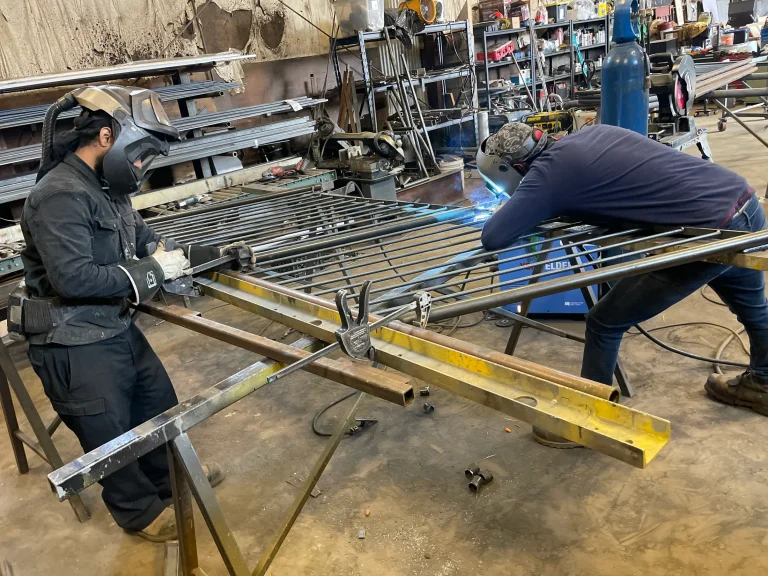
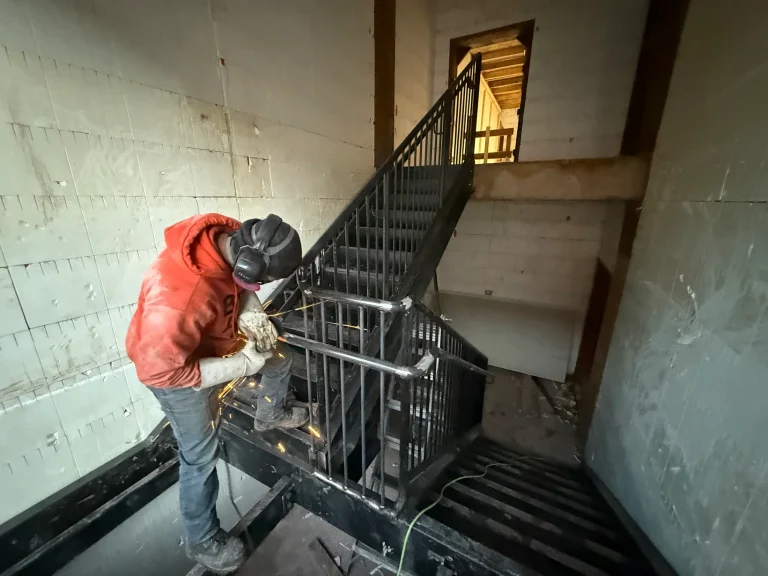
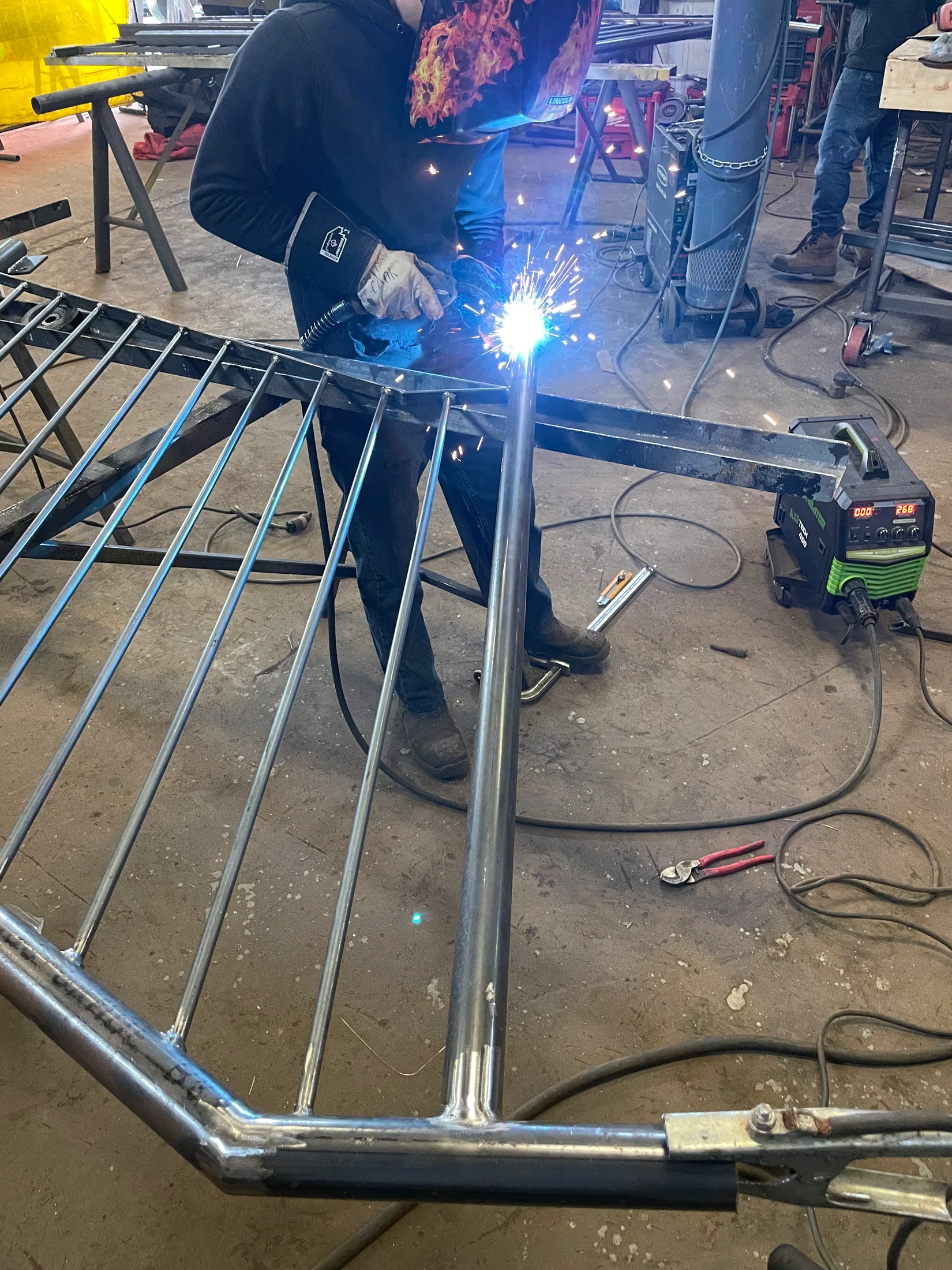
Shop fabrication offers controlled fit-up, stable work positions, consistent lighting, and access to fixed equipment. Mobile welding and field installation are valuable when components must be connected, modified, or repaired in place. Many successful scopes use both: field measurement, shop fabrication, then delivery and installation.
A fabricator should be willing to explain why a component should be removed, divided into assemblies, fabricated off site, or completed in place. The answer should reflect quality, safety, access, and total project effort rather than the convenience of one method.
Ask how communication and changes are handled
Fabrication decisions often involve several people: owner, contractor, designer, site supervisor, coating supplier, and installer. Confirm who can approve dimensions and changes, how revisions will be recorded, and when field conditions must be checked. A verbal change that is not reflected in the current information can become an expensive conflict later.
Schedule discussions should include more than a final date. Ask about information release, approvals, material availability, field measurement, coating, delivery, and installation windows. If another trade or shutdown controls the sequence, make that dependency visible at the start.
Questions to ask before selecting a fabricator
- Does the shop regularly handle this material and type of component?
- Which drawings, dimensions, or design information are still required?
- What is included in the price, and what is excluded?
- Will work be completed in the shop, on site, or through both?
- Who is responsible for engineering, anchors, finishes, lifting, and installation?
- How will revisions, site conditions, and schedule changes be documented?
- Are the required qualifications, safety planning, and insurance appropriate to the scope?
Start with evidence from the actual job
The best first message includes the project location, drawings or sketches, photographs, approximate dimensions, required timing, and a short description of the desired result. Browse BriteArc’s fabrication project archive for relevant examples, or send the available information for a scope review.